Hiring a Roofer in Connecticut: Registration, Permit, Insurance and What to Ask
Every roofing company working on a Connecticut home must be registered with DCP. How to check it, confirm insurance and the permit, and what the contract has to say before work starts.
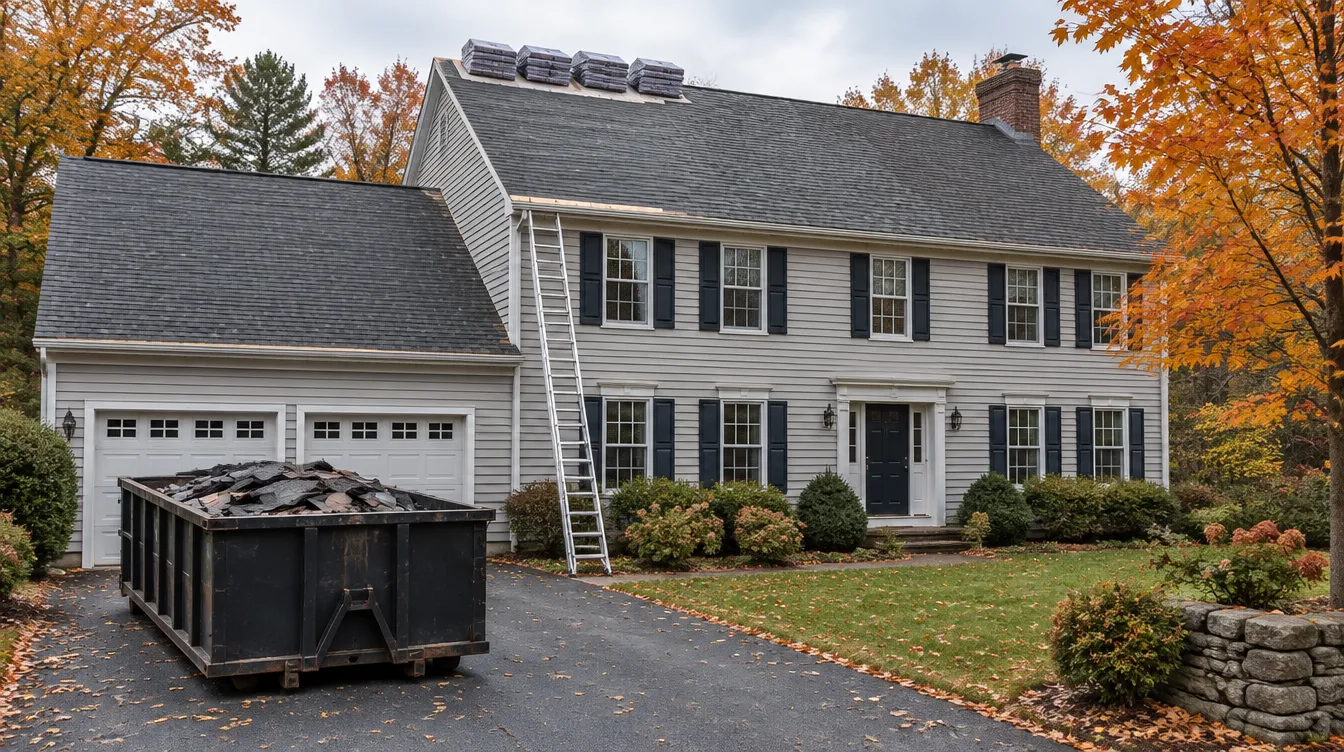
A roof is one of the biggest checks most Connecticut homeowners ever write to a contractor, and one of the jobs that is hardest to judge from the ground. You cannot see the underlayment once the shingles are on. So the checking has to happen before anyone climbs a ladder.
Roofing complaints are common in this state. The Department of Consumer Protection (DCP) received 285 roofing related complaints in 2024 and 247 in 2023, ranging from poor installations to leaks around solar panels to door to door pitches after storms. Here is what Connecticut requires of a roofer, and what to ask before you sign.
The registration every roofer needs
Connecticut's Home Improvement Act names roofs in its definition of home improvement work, along with siding, windows, doors, insulation and more, when the total price is over $200. New home construction is covered by a separate law. DCP is direct about it: all roofing companies must have an active Home Improvement Contractor registration, and checking it should be your first step.
Look the company up at elicense.ct.gov. Three things to confirm:
- The status is active, not expired, suspended or revoked.
- The contact details match. DCP says the name and contact information on eLicense should match the company's website.
- The number matches their ads. State law requires a registered contractor to say it is registered and include its registration number in its advertising, and to show its certificate to anyone who asks.
If the person quoting the job is a salesperson rather than an owner or officer, they need their own salesperson registration. (How to run the lookup, step by step.)
One limit to keep in mind. DCP notes that a registration is not an endorsement of the company. It tells you the business is on file with the state. It does not grade the work.
Proof of insurance
Roofing means people working at height on your property. DCP's guidance on roof work says the company should carry its own liability insurance and be able to produce an insurance certificate. Call the insurance company named on the certificate to confirm the coverage is real. If the company has employees on the job, it should show proof of workers' compensation, which employers are required to carry. (How to confirm a contractor's insurance.)
The permit
Under the Home Improvement Act, no contractor may start work until every building or construction permit required by state law or local ordinance has been obtained. DCP's roofing advice is to agree, before work starts, on who will pull the permit. If the roofer is pulling it, verify with your town's building official that the right permit has been issued. Do not take a "we handle that" on faith. (How to check a permit with your town.)
The contract
A Connecticut home improvement contract is not valid or enforceable against you unless it is in writing and signed by you and the contractor. Among other things, it must contain:
- The date of the transaction.
- The contractor's name, address and registration number.
- A starting date and a completion date.
- A notice of your right to cancel.
- The entire agreement. Any change later has to be in writing and signed by both of you.
DCP adds that a roofing contract should include a summary of the project and the total cost, with a breakdown or timeline of payments. The contractor has to give you a completed copy when you sign.
Every home improvement contract in Connecticut counts as a home solicitation sale, wherever it was signed. That gives you until midnight of the third business day after the sale to cancel. Since July 1, 2025, Saturday, Sunday and legal holidays do not count as business days. Some older state pages still say Saturday counts; the current statute does not.
Questions to ask before you sign
- What is your registration number? Then look it up yourself.
- Who is your insurer? Get the certificate and call the insurer.
- Who is pulling the permit? Put the answer in the contract.
- Can I have a copy of the shingle warranty? DCP recommends asking for the manufacturer's warranty before the project starts. It covers repair or replacement of defective shingles within a set period.
- What is the payment schedule? Be wary of anyone who wants a large share of the cost up front. DCP lists that as a high pressure tactic.
Roof damage and your insurance
If someone tells you your roof is damaged, DCP's advice is to check with your insurance company first. Filing a claim can affect future claims or your continued coverage, and the insurer can inspect the roof itself. DCP also warns about contractors who offer to pad the contract total to cover your deductible. Insurers know the tactic, and it can get your policy cancelled.
Know what you are getting. DCP says roof estimates are often free and give you a quoted price for known damage. Inspections, which look for damage you do not know about, are usually not free; DCP puts the average between $250 and $300. If a public adjuster is involved, check on eLicense that their credential with the Connecticut Insurance Department is active.
If the roofer takes a deposit and does not show
Connecticut law gives you a tool here. If no substantial part of the work has been done and more than 30 days have passed since the contract's start date (or since the contract date, if no start date was given), the contractor must refund what you paid within ten days of your written request, mailed or delivered to their last known address. Failing to refund is a crime. Offering or doing home improvement work without a current registration is a class B misdemeanor, and DCP can add civil penalties of up to $1,500 per violation.
If you hired an actively registered contractor and the job goes wrong, you may be able to recover up to $25,000 per contract from the Home Improvement Guaranty Fund. That protection does not exist if the roofer was never registered, which is one more reason to check first. Complaints go to DCP at dcp.complaints@ct.gov.
DCP's full roofing alert is on portal.ct.gov.
Where TradeCheck fits
The registration lookup and the insurance call are the two checks that matter most before a roof job, and both can change after you look. TradeCheck confirms registration and insurance against the source for every business we verify, dates each check, and re-checks on a schedule. If you would rather start from roofers who have already passed, find a verified pro near you.
Skip the state databases
A TradeCheck record shows the license, insurance, identity and standing we checked, and the date we checked it. Free to read, no account.
Check a contractor