How to Check Whether Your Contractor Pulled a Building Permit in Connecticut
In Connecticut the permit is ultimately the homeowner's responsibility, even when the contractor applies. What the law requires and how to confirm it with your town before work starts.
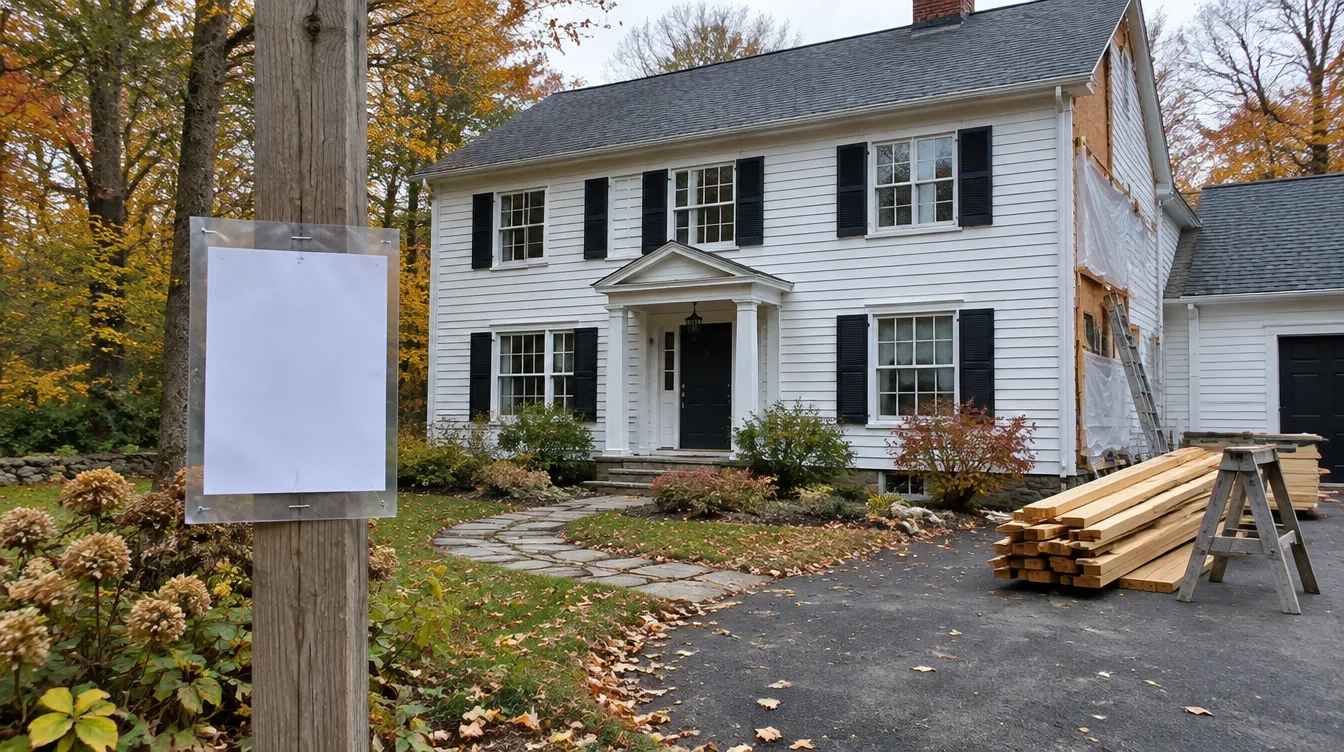
Your contractor says the permit is handled. Maybe it is. In Connecticut, though, the state is blunt about who answers for it if it is not: having the correct building permit in place is ultimately the homeowner's responsibility. The Department of Consumer Protection (DCP) adds that if your contractor says the permits are taken care of and they are not, you are still responsible.
The fix is a short phone call or visit to your town's building department. Here is what the law says, what to ask, and when to ask it.
What Connecticut law requires
Section 29-263 of the Connecticut General Statutes says no building or structure may be constructed or altered until an application has been filed with the building official and a permit issued, except where the State Building Code says otherwise. The rules that matter to a homeowner:
- Only the owner or the owner's authorized agent can apply. A contractor can apply for you as your agent. Either you or the contractor may pull the permit.
- The building official has 30 days from the application to issue or refuse the permit, after reviewing the plans against the State Building Code.
- A registered home improvement contractor has to identify itself. The town cannot issue a permit to a contractor who must be registered with DCP unless the application clearly shows the contractor's name, business address and DCP registration number, and the contractor has presented its certificate of registration.
- Work waits for the permit. The Home Improvement Act says no contractor shall start work until every required building or construction permit has been obtained. DCP puts it simply: the permit must be in hand before the work begins.
Trade work follows the same path. A licensed electrical, plumbing or heating contractor who cannot apply in person may have a delegate apply, but only for the part of the job that contractor is licensed to do, and only with written authorization filed with the building official. (Which trade license to look for.)
How to check that the permit was pulled
DCP's advice to homeowners who let the contractor apply is to verify with the local building official that all required permits are in place. Each town runs its own building department, so start at your city or town hall.
- Ask by address. Call or visit the building department and ask whether a permit has been issued for work at your address, and for what work. Write down the permit number and the date it was issued.
- Match the scope. A permit for a deck does not cover the new bathroom inside. If the job has several parts, such as framing, electrical and plumbing, ask whether each part that needs a permit has one.
- Match the contractor. If the contractor applied, the application should carry their name and DCP registration number. Ask the building department whose name is on it, then look that registration up on elicense.ct.gov. A permit pulled under someone else's name is a question worth asking before work starts. (How to run the lookup.)
- Ask what inspections are required and what final sign-off the job needs before it is closed out.
Do this before the first day of work, not after.
Other approvals the permit may depend on
A building permit is not always the only approval. DCP's guide for contractors points out that a project may also need permission from the local planning, zoning or inland wetland boards. It also notes that Connecticut requires contractors to show the building inspector proof of workers' compensation coverage when they apply for a building permit. If your contractor says they cannot get a permit, ask which of these is holding it up.
Finishing the job: inspections and the certificate of occupancy
Under section 29-265, a building or structure erected or altered in Connecticut may not be occupied or used until the building official issues a certificate of occupancy certifying that the work done under the permit substantially conforms to the State Building Code. In practice, that means the permit is not finished when the contractor leaves. It is finished when the town signs off.
Connecticut does give old permits an end date. For a one or two family home, or a structure on the same lot such as a shed, garage, fence, pool or deck, a building permit with no certificate of occupancy is deemed closed nine years after it was issued, and no enforcement action based on that open permit can be started after that. Nine years is a long time to carry an open permit, so ask for the final sign-off while the contractor is still around to fix anything the inspector flags.
Why it matters to you
Violating the State Building Code can bring a fine of $200 to $1,000, up to six months in jail, or both. Beyond the penalty, a permit is how a town inspector gets eyes on work you cannot judge yourself: framing, wiring, venting, drainage. Skipping it saves a contractor a fee and a wait. It does not save you anything.
Three steps cover most of the risk:
- Put permit responsibility in writing. Your home improvement contract should say who applies for each permit.
- Get the permit number before work starts and confirm it with the building department yourself.
- Hold the final payment until the work has passed its final inspection.
The full text of the permit and certificate of occupancy rules is in Chapter 541 of the General Statutes.
Where TradeCheck fits
A permit check tells you the town knows about the job. It does not tell you the contractor is registered today, insured, or who they say they are. Those are the checks TradeCheck runs on every business we verify: registration and insurance confirmed against the source, dated, and re-checked on a schedule. If you would rather start from contractors who have already passed them, search verified pros near you, or see exactly what we check.
Skip the state databases
A TradeCheck record shows the license, insurance, identity and standing we checked, and the date we checked it. Free to read, no account.
Check a contractor