Storm Chasers in Connecticut: What to Check Before You Hire a Contractor Who Knocks on Your Door
After a storm, contractors go door to door in Connecticut. What registration they need, your three business day right to cancel, and the red flags the state warns about.
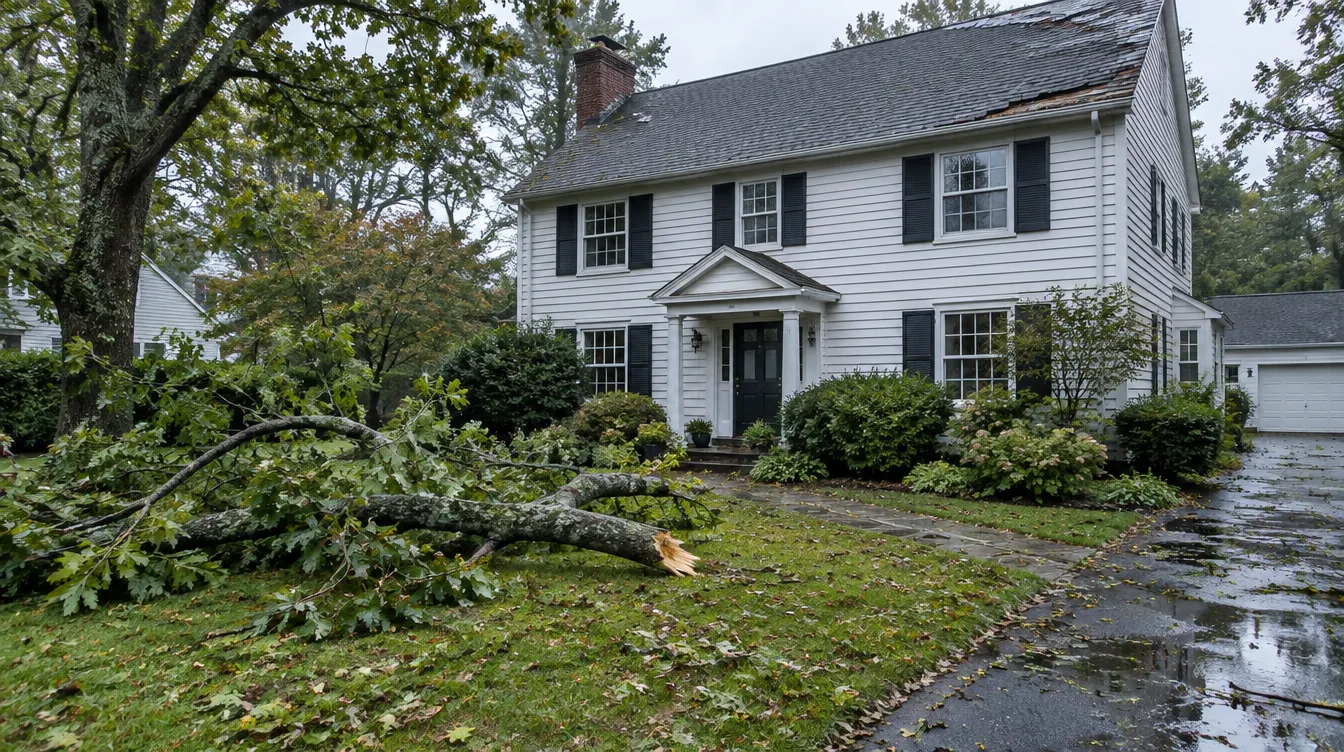
A limb on the roof, shingles in the yard, water coming through a ceiling. The day after a storm, someone knocks and offers to fix it today. Sometimes that is a good local contractor. Sometimes it is what Connecticut's Department of Consumer Protection (DCP) calls a storm chaser: someone who shows up because they know you need repairs fast and will not look closely.
You do not have to turn everyone away. You do have to run the same checks you would on any other job, and Connecticut law gives you some extra room when the sale starts at your door.
The red flags the state warns about
DCP's storm chaser warnings list the same signs year after year. Be wary of a contractor who:
- Knocks on your door, or otherwise seeks you out, rather than you calling them.
- Offers a very low price, but only if you commit right now.
- Wants cash, a wire transfer or any other payment you cannot trace.
- Will not give you a written contract. Contracts are required by law in Connecticut.
- Will not give references or proof of credentials.
One of these on its own is not proof of a scam. Two or three together is a reason to close the door and call someone you found yourself.
The registration they need
Anyone contracting with a homeowner to make a permanent change to residential property in Connecticut must be registered with DCP as a home improvement contractor. DCP's list of covered work includes roofs, siding, windows, doors, insulation, waterproofing and more. Jobs under $200 are exempt, and so is work that falls inside a trade license such as electrical or plumbing, which has its own license to check.
The person at your door may be a salesperson rather than the owner. In Connecticut, anyone who solicits or negotiates a home improvement contract on a contractor's behalf must hold their own home improvement salesperson registration. The owners and officers of a registered business are the exception. Ask for both names and look up both.
Tree work is different. Cutting trees and shrubs is not home improvement work, and DCP points out that anyone doing tree trimming or related work needs an arborist license from the Department of Energy and Environmental Protection (DEEP).
All of these can be checked in minutes at elicense.ct.gov. Here is the lookup, step by step.
Your right to cancel a sale made at your door
When a seller solicits a sale and you agree to it somewhere other than their place of business, such as your kitchen table, Connecticut's Home Solicitation Sales Act applies. It gives you until midnight of the third business day after the date of the sale to cancel.
Since July 1, 2025, a business day under this law excludes Saturday, Sunday and Connecticut legal holidays. Sign on a Wednesday and your days are Thursday, Friday and Monday, so you have until midnight Monday.
The law also sets out what the seller owes you:
- A signed, dated copy of the contract, in the language used in the sales pitch, with the seller's name and address.
- A bold statement near your signature that you may cancel before midnight of the third business day.
- A filled-in "Notice of Cancellation" form, in duplicate, showing the seller's email, fax and mailing address and your deadline date.
- A spoken explanation of your right to cancel when you sign.
To cancel, sign and date that notice and send it by email, fax or mail. The seller then has ten business days after receiving it to refund your payments and cancel any note or lien tied to the sale. The contract cannot include a waiver of your cancellation right. A seller who breaks the Act can face a fine of up to $500, up to 90 days in jail, and action under the Unfair Trade Practices Act.
The emergency exception
There is one way to give up the three days, and it is narrow. It applies only if you started the contact, the work is needed for a real and immediate personal emergency, and you write out by hand, sign and date a separate statement describing the emergency and waiving your right to cancel. If a contractor who knocked on your door hands you a waiver to sign, that is not this exception.
Paying for storm repairs
DCP's advice is plain: do not pay for the whole job in advance, especially in an emergency. Pay in stages as the work gets done, with the final payment when it is finished to your satisfaction, and pay by check or credit card, not cash. Get more than one quote, even when it feels urgent. Before anyone climbs on your roof, get proof of insurance from their agent, not a photo on a phone (how to confirm it).
If something already went wrong
DCP takes complaints about storm chasers and bad contractors. Email the details, with receipts, the contract and notes of what was said, to dcp.complaints@ct.gov. The Attorney General's office also takes complaints at 860-808-5318. If you are still inside the three business days, send the cancellation notice first.
The short version
- Look up the business and the salesperson on eLicense before you sign.
- Tree work needs a DEEP arborist license, not a home improvement registration.
- Get a written contract with the cancellation notice attached.
- You have until midnight of the third business day. Weekends and holidays do not count.
- No cash, no full payment up front.
The full text of the law is in Chapter 740 of the Connecticut General Statutes.
TradeCheck confirms license and insurance against the issuing source for every business we verify, dates the check, and re-checks it on a schedule. If you would rather call someone who has already passed that check than answer the door, find a verified pro near you.
Skip the state databases
A TradeCheck record shows the license, insurance, identity and standing we checked, and the date we checked it. Free to read, no account.
Check a contractor